Incoterms Explained: A Guide to International Shipping Terms
When it comes to international shipping, there are generally multiple parties and many steps involved. With so many moving pieces, it’s imperative that everyone is clear and on the same page.
Understanding who is responsible for shipping, insurance, customs clearance, and more is crucial to avoiding costly delays or mistakes in any step of the process. This is where Incoterms become a valuable resource.
Incoterms – short for International Commercial Terms – are a set of standardized rules published by the International Chamber of Commerce (ICC) that define each party’s responsibilities in international trade. First published in 1936, Incoterms are now updated every 10 years to reflect changes in global trade. The most recent version (pictured below) was published in 2020 and includes 11 terms that cover all types of transport.
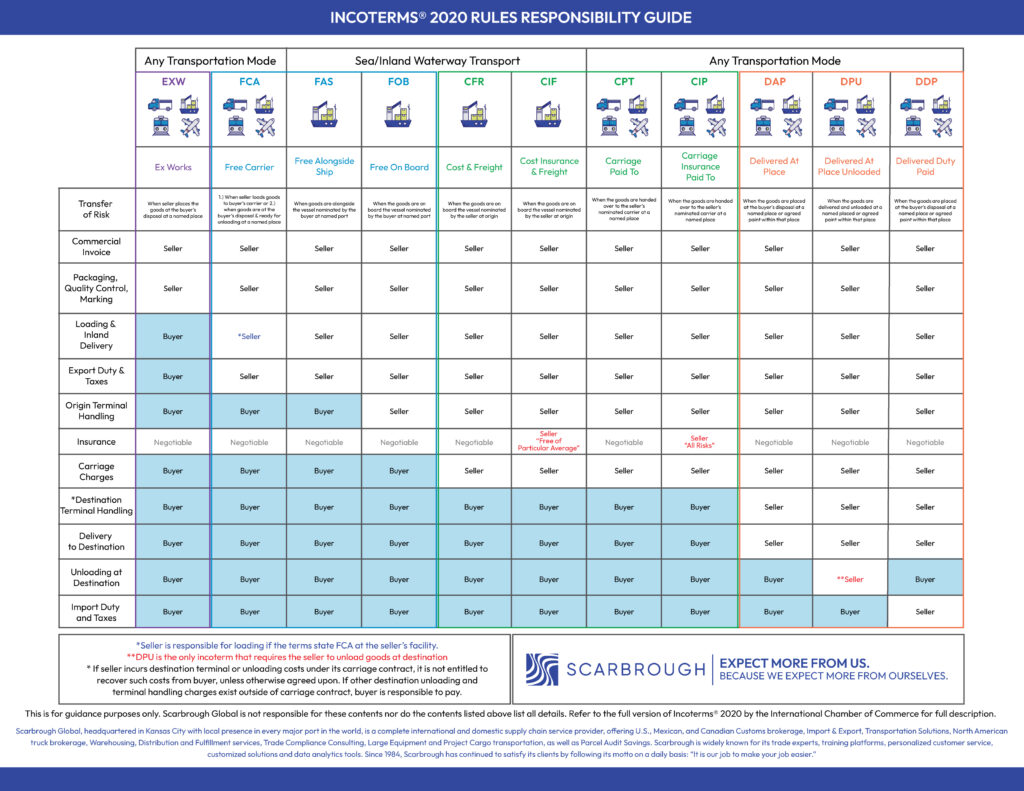
These terms outline who is responsible for transporting goods, paying for freight and insurance, handling customs clearance, and assuming the risk of damage or loss. When applied correctly, Incoterms eliminate confusion and provide a solid framework for international shipments.
Proper use of Incoterms can also help prevent any legal disputes in the event something goes wrong during transit. The clearly defined responsibilities associated with each term take any guesswork or uncertainty out of the equation.
It is important, though, to make sure the proper terms are being used. Each new version comes with its own updates, so using an older version can lead to improper application of the terms. Another common mistake is failing to specify the location tied to a given term. For example, under FCA, the seller is responsible for making the goods available either at its own location or another named location, but if the place isn’t specified, the buyer may not know where to retrieve the goods.
Insurance is another area where missteps are common. Only two Incoterms (CIF and CIP) require the seller to provide insurance. With others, responsibility must be clarified in advance to avoid gaps in coverage
Other important factors to consider when choosing the right Incoterm include the experience level of the buyer and seller, the mode of transport, customs regulations of the destination country, insurance and risk tolerance, and level of control each party wants during shipping.
For a deeper dive into each term and the responsibility involved, please view Scarbrough’s full Incoterms Guide. Or reach out to our team directly – we’re here to simplify this process, and offer expert solutions for all your shipping needs.


